
AddUp, WBA Investigate Additive Manufacturing for Moldmaking Tooling Study
The additive manufacturing (AM) tooling study focused on six select companies, offering them the opportunity to test the introduction of AM and specifically implement the technical and economic advantages of AM technology for their injection molds.


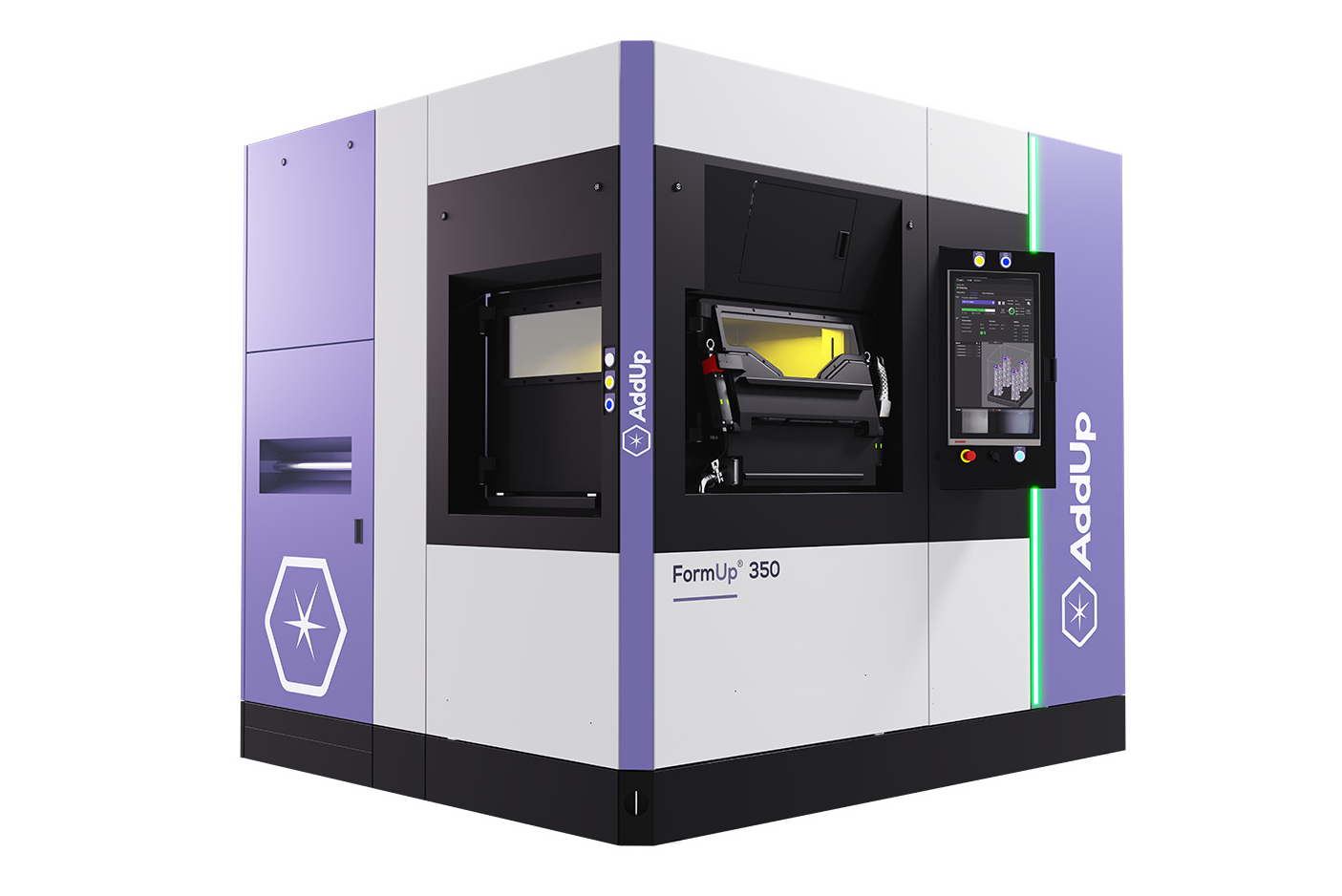
Photo Credit: AddUp
AddUp and the WBA Aachener Werkzeugbau Akademie are proving the benefits of metal additive manufacturing (AM) for moldmaking to six toolmaking companies through its tooling study. Launched in January 2023, this consortium study has delivered the first prototypes of injection molds with optimized internal cooling channels.
AddUp is a global metal additive manufacturing OEM for powder bed fusion (PBF) machines, which established its AM Tooling Competence Center in Aachen in partnership with the Werkzeugbau-Akademie (WBA) in early 2023. This facility, also serving as AddUp’s German subsidiary, was created to accelerate the adoption of metal AM by tooling companies. AddUp has extensive experience in the tooling industry developing applications and materials best suited for mold and tool production.


The AM Tooling Competence Center provides a resource for tooling manufacturers to develop their applications and partner with a global leader in PBF technology. The facility is equipped with a FormUp 350 PBF machine and toolmakers have the opportunity to submit application cases for evaluation and to study all aspects of their project, from the design applied to PBF, to the profitability analysis and the study of series production.
AddUp and the WBA are conducting an AM tooling study with six select companies. This first group of companies include Pöppelmann, Siebenwurst, Harting, Zahoransky, GIRA and FRAMAS. The study offered them the opportunity to test the introduction of AM and to specifically implement the technical and economic advantages of AM technology for their injection molds.
The study is supported by companies like iQTemp (AM design and simulation of cooling channels), Deutsche Edelstahlwerke (AM materials), 3D Laser BW (specialist in mold inserts with near-contour cooling systems and AM service provider), Siemens NX and institutes such as Fraunhofer ILT and ACAM.
Traditionally, injection molding manufacturers must deal with certain constraints inherent to the manufacturing of their molds. The mold’s performance is directly related to its ability to cool the injected parts. PBF technology is adapted to create complex cooling channels, positioned as close as possible to the mold walls. By adapting the shape of the channels to cool the surface of the part more homogeneously, manufacturers can see improved quality and experience higher productivity with a reduction of cooling and cycle times.
The choice of material is critical for toolmakers, as the molds must meet high requirements especially in terms of corrosion resistance, heat conductivity and fatigue. AddUp has 20 years of AM experience with Maraging 300, which is successfully used in series production by Michelin to manufacture more than a million tire molds sipes per year. Additionally, AddUp has developed AM build parameters for the AISI 420 corrosion-resistant tool steel, also referred to in the German standard as 1.2083, which is now available as an AddUp standard additive material for injection molding in the future. AddUp is committed to supporting the tooling industry and continues to develop other materials to maximize productivity and efficiency.
The six companies that have participated in the AM Tooling Study have identified their own case studies for parts which have been manufactured using traditional machining processes. AddUp, with the support of its partners, has evaluated each of these parts to determine how they could be optimized with AM. Each part was then designed for AM, optimized for conformal cooling and manufactured on AddUp’s 4-laser FormUp 350. Postprocessing was then completed by the tooling company itself or by the WBA. Each of these ready-to-use molds were then sampled on the respective tooling company’s production lines and the comparative data will be provided to the WBA. In the 4th quarter of 2023, the results of this first Tooling Study will be officially published by the WBA during its General Assembly.
- Check out this article on AddUp’s participation in a $1.5 million USAF research on IN-718 additive manufacturing. AddUp is partnering with Zeda to provide critical project support to provide the USAF with a set of manufacturing guidelines to maximize the capabilities of LPBF to meet fleet readiness and sustainment goals.
- Read about AddUp collaborating with Dassault Systèmes on an aerospace digital continuity project. The companies are collaborating on the Aeroprint project, which aims to establish a certified additive manufacturing pilot line for aeronautics.


Related Content

4 Ways 3D Printing Is Enabling Metal Casting
While metal additive manufacturing sometimes competes with casting, AM is also assisting this process on the tooling front.
Read More
Robot Vs. Gantry for Large-Format Additive Manufacturing (Includes Video)
Additive Engineering Solutions, specialist at 3D printing very large parts and tools on gantry machines, now also uses a robot for large-format AM. Here is how the robot compares.
Read More
Video: "Lightweighting" for 3D Printed Investment Casting Patterns
3D Systems' QuickCast design strategies reduce the amount of material used to make investment casting patterns, reducing weight but also cost for these tools.
Read More
Video: 3D Printed Polymer Composite Tool Riser Wins Against Aluminum Casting
Plastics specialist KraussMaffei applies its own large format additive manufacturing (LFAM) equipment to produce tooling risers in polymer composite as an alternative to metal.
Read MoreRead Next

Three Drivers of AM Materials Development and Adoption
Lack of material options is becoming an outdated reason not to use additive manufacturing. But what factors are driving the creation — and use — of new materials for AM?
Read More
Bike Manufacturer Uses Additive Manufacturing to Create Lighter, More Complex, Customized Parts
Titanium bike frame manufacturer Hanglun Technology mixes precision casting with 3D printing to create bikes that offer increased speed and reduced turbulence during long-distance rides, offering a smoother, faster and more efficient cycling experience.
Read More
Additive Manufacturing Versus Cavitation
The design freedom possible with laser powder bed fusion (LPBF) metal 3D printing is making it faster and easier to produce complex anticavitation devices for valves.
Read More