
Omni-Pac, HP Join Forces to Transform Molded Fiber Production, Reduce CO2 Emissions
The companies say this pioneering collaboration will drive digital transformation and sustainability in the packaging industry.


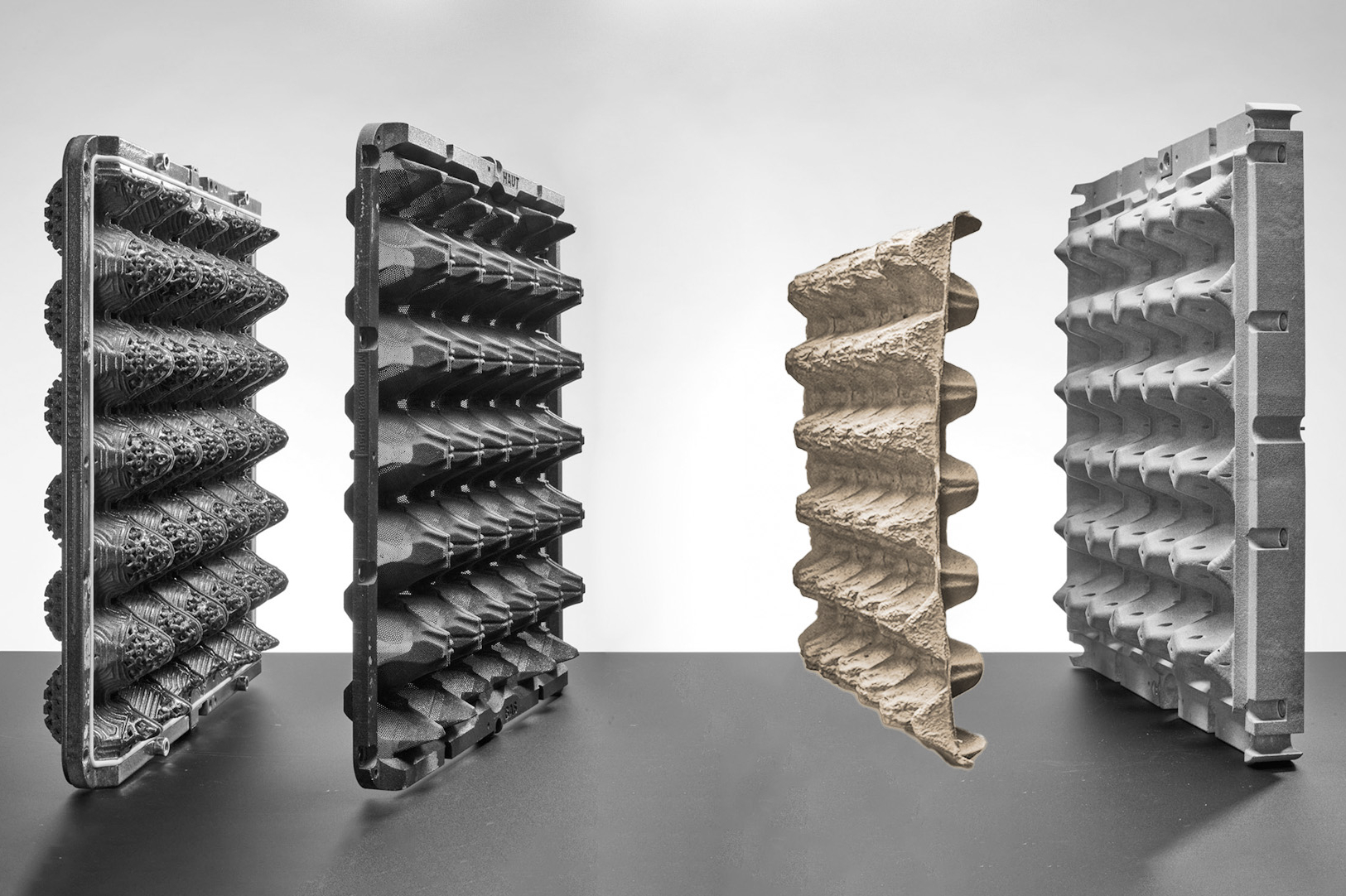
Photo Credit: HP
Omni-Pac Group, a molded fiber packaging provider, has partnered with HP to digitize and transform the way molded fiber is produced at an industrial level. This collaboration is helping Omni-Pac reduce CO2 emissions and replace single-use plastics with more sustainable packaging solutions. By working together, both companies are aiming to drive innovation and sustainability in the molded fiber industry.
Pablo Libreros, CEO of Omni-Pac Group, expressed his excitement, emphasizing the company’s leading role in driving innovation and sustainability within the industry through its collaboration with HP. “Our collaboration with HP allows us to revolutionize the production of molded fiber at an industrial scale, transforming the development, launch and production of molded fiber applications,” Libreros says. “This not only reduces environmental impact but also pioneers sustainable packaging solutions.”


Libreros also highlighted the significant benefits of the collaboration. “Enabling us to achieve over 500 tons per machine per year through digitalization, the level of CO2 savings will continue to improve as our collaboration with HP progresses,” he adds.
HP’s Molded Fiber Tooling Solution provides a customized digital solution for companies like Omni-Pac, enabling them to achieve unprecedented levels of efficiency and sustainability. The adoption of HP’s technology empowers Omni-Pac to deliver innovative products that meet the evolving needs of consumers and businesses. The solution includes the HP Molded Fiber Advanced Tooling technology, which optimizes manufacturing processes, delivering high-quality products with enhanced performance through Computational Fluid Dynamics (CFD) grammage control and customized features such as logos and textures.
Additionally, it significantly enhances Molded Fiber packaging sustainability by reducing the carbon footprint during tooling and part production, resulting in lighter parts with equal or better performance.
Mariona Company, global head of fiber-based sustainable packaging at HP, notes the significance of the collaboration. “HP's Molded Fiber Tooling Solution technology is empowering companies like Omni-Pac to deliver efficiencies, enable new products, and reduce CO2 emissions,” Company says. “By working together, Omni-Pac and HP are at the forefront of driving innovation and sustainability in the molded fiber industry.”
HP says its ambition is to be a lighthouse brand for purpose. By 2030, the company intends to become the world’s most sustainable and just technology company. With a shared vision and common goals, Omni-Pac and HP are united in their commitment to creating a better future. This collaboration is said to serve as a testament to the power of innovation, driving the industry toward a more sustainable and environmentally conscious approach to packaging production.
- Read about growing additive manufacturing adoption with HP aiming for the C-Suite. 3D printing has been largely the purview of service bureaus and technical specialists, but HP sees a future where it is increasingly the concern of OEM executives — and the company is taking steps to reach them.
- Here’s more news from HP as it expands automation solutions for advancing 3D printing path to production. HP’s Jet Fusion automation solutions are designed to simplify workflows and reduce costs for high-volume 3D production. The company has also expanded its materials, HP Digital Production Suite and HP Digital Production Services for polymer and metal customers.


Related Content

Additive Manufacturing Adds to Vertically Integrated Knowledge at Penn United
The employee-owned manufacturer’s deep knowledge and experience in traditional manufacturing prepared it to adopt additive. Now, the investment is paying off.
Read More
8 Cool Parts From Formnext 2024: The Cool Parts Show #78
End-use parts found at Formnext this year address various aspects of additive's advance, notably AM winning on cost against established processes.
Read More
Power Generation at the Point of Need, Enabled by Additive Manufacturing
Hyliion is commercializing a generator that will enable efficient production of sustainable power, using a centuries-old idea that can now be fully realized through metal 3D printing.
Read More
What Is the Role of Directed Energy Deposition (DED)? We Are Still Discovering It
The applications go well beyond repair. Recently posted articles find many different use cases for DED, including its expanded application for production parts.
Read MoreRead Next

Bike Manufacturer Uses Additive Manufacturing to Create Lighter, More Complex, Customized Parts
Titanium bike frame manufacturer Hanglun Technology mixes precision casting with 3D printing to create bikes that offer increased speed and reduced turbulence during long-distance rides, offering a smoother, faster and more efficient cycling experience.
Read More
Beehive Industries Is Going Big on Small-Scale Engines Made Through Additive Manufacturing
Backed by decades of experience in both aviation and additive, the company is now laser-focused on a single goal: developing, proving and scaling production of engines providing 5,000 lbs of thrust or less.
Read More
Three Drivers of AM Materials Development and Adoption
Lack of material options is becoming an outdated reason not to use additive manufacturing. But what factors are driving the creation — and use — of new materials for AM?
Read More


