
Nikon Invests in Hybrid Manufacturing Technologies
HMT’s technology enables users to take full advantage of the additive manufacturing process by unifying multiple complementary technologies in one setup.


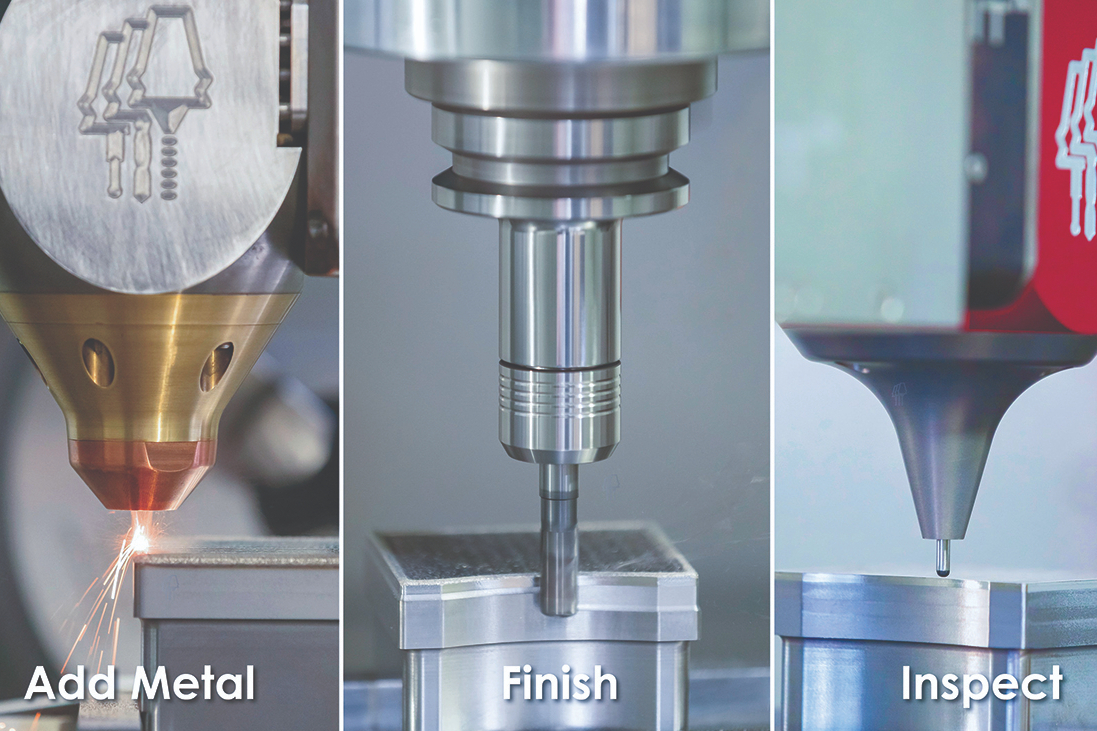
HMT has expanded the concept of “done-on-one machine” with product offerings that include metal and polymer AM, melt pool monitoring, inspection and more. Photo Credit: HMT
Nikon Corp. is investing in Hybrid Manufacturing Technologies (HMT), an additive manufacturing (AM) company which successfully created an approach that enables users to integrate additive tools onto any platform. This technology enables users to take full advantage of the manufacturing process by unifying multiple complementary technologies in one setup.
According to the company, parts manufacturers will often use AM processing and machining in tandem, depending upon their specific production goals and tolerances. HMT enabled a huge leap forward by unlocking the freedoms of additive while retaining the precision and surface finish capabilities of CNC, all in a single system.


When using the Ambit deposition heads, only a simple tool change is required to switch from cutting to adding metal, giving users greater flexibility. HMT’s tool changeable heads are not limited to laser processes but are also compatible with numerous materials and a vast array of deployment methods. HMT can upgrade existing vertical platforms to enable both additive and subtractive machining capabilities in one system, or create bespoke solutions with customized heads to meet the user's objectives.
Nikon manufactures some of the most precise equipment in the world, with its products being used in applications ranging from semiconductor manufacturing and mass production of panels for televisions and smart devices, to medical systems, automotive and satellites. Nikon established the Next Generation Project Division to accelerate the launch of new growth businesses, including advanced materials processing technologies, through synergies resulting from strategic investments and alliances with industry-leading companies worldwide.
This latest investment will enable HMT and Nikon to leverage their combined expertise to accelerate innovation and expand the hybrid manufacturing landscape. “This investment in HMT is the latest component of our Next Generation Project program to further industrialization of digital manufacturing,” says Yuichi Shibazaki, Nikon corporate vice president and general manager of the Next Generation Project Division. “As an industry leader with demonstrated collaborative capabilities, HMT and its Ambit portfolio are well-matched with Nikon technologies. We look forward to working with them as part of our commitment to creating value and advancing society through novel industries like hybrid manufacturing.”
The investment should benefit both companies. “Together we will more fully deliver on the promise of additive and digital manufacturing,” says Dr. Jason B. Jones, HMT co-founder and CEO. “We expect the results of this technology will touch the lives of virtually all people on earth in the coming decades.”
HMT believes Hybrid is all about synergy. “For the better part of 10 years in this industry, we have taken pride in the strategic nature of our collaborations and our partnership with Nikon takes this to a whole new level by adding value to advanced manufacture,” says Peter Coates, HMT co-founder and CTO.
• AMT’s Tim Shinbara includes Hybrid Manufacturing Technologies in his discussion about hybrid systems combining traditional subtractive processes with additional processes. These can include laser metal deposition for additive manufacturing and friction stir welding, enabling manufacturers to design products from the inside-out.


Related Content

New Equipment, Additive Manufacturing for Casting Replacement and AM's Next Phase at IMTS 2024: AM Radio #54
Additive manufacturing’s presence at IMTS – The International Manufacturing Technology Show revealed trends in technology as well as how 3D printing is being applied today and where it will be tomorrow. Peter Zelinski and I share observations from the show on this episode of AM Radio.
Read More
Video: For 3D Printed Aircraft Structure, Machining Aids Fatigue Strength
Machining is a valuable complement to directed energy deposition, says Big Metal Additive. Topology-optimized aircraft parts illustrate the improvement in part performance from machining as the part is being built.
Read More
Video: Robot Machining Will Complement Robot DED
Robots can do additive manufacturing. Can they do hybrid manufacturing? Precision milling of metal using a robot offers this promise.
Read More
Pic of the Week: Laser Hotwire Deposition + Five-Axis Machining
Hybrid manufacturing can be a powerful combination of additive manufacturing and CNC machining, but programming these machines can be a challenge. This week’s Pic highlights a software plugin that aids this process.
Read MoreRead Next

Bike Manufacturer Uses Additive Manufacturing to Create Lighter, More Complex, Customized Parts
Titanium bike frame manufacturer Hanglun Technology mixes precision casting with 3D printing to create bikes that offer increased speed and reduced turbulence during long-distance rides, offering a smoother, faster and more efficient cycling experience.
Read More
Additive Manufacturing Versus Cavitation
The design freedom possible with laser powder bed fusion (LPBF) metal 3D printing is making it faster and easier to produce complex anticavitation devices for valves.
Read More
Three Drivers of AM Materials Development and Adoption
Lack of material options is becoming an outdated reason not to use additive manufacturing. But what factors are driving the creation — and use — of new materials for AM?
Read More