
BPMI Chooses Velo3D Metal 3D Printing System to Produce Parts for U.S. Naval Nuclear Propulsion Program
The fully integrated 3D printing solution will be operated by ATI in a newly established facility that will provide the U.S. Naval Nuclear Propulsion Program with alternatives to cast parts.


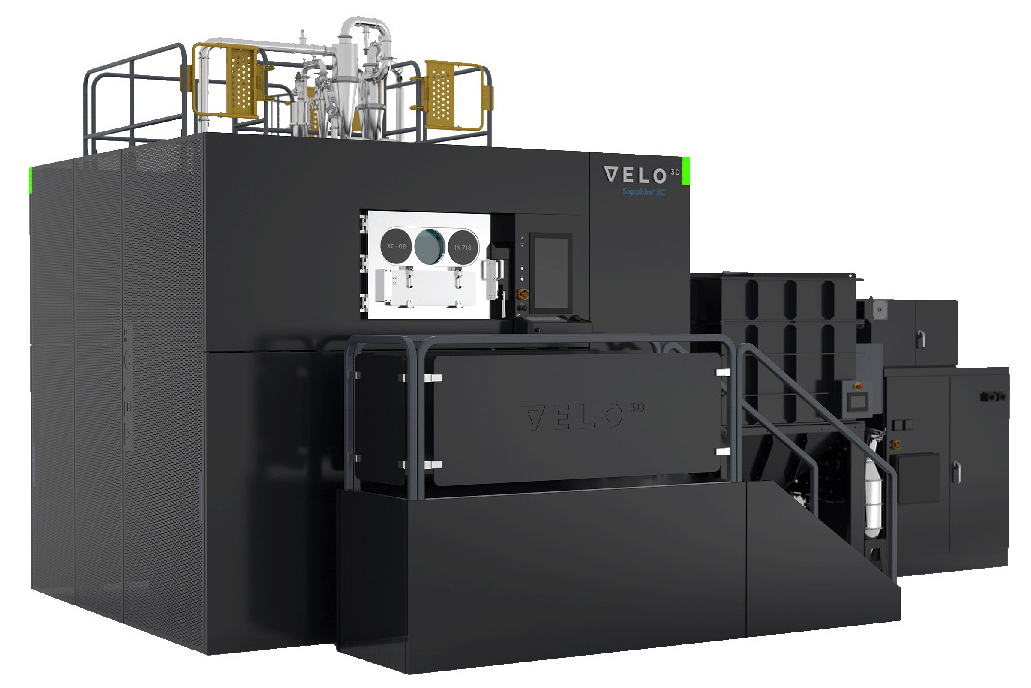
A Velo3D large-format Sapphire XC Hero HR TX. BPMI has chosen a Sapphire XC to be operated by ATI in a new Florida facility that supports the U.S. Navy. Source: Velo3D
Bechtel Plant Machinery Inc. (BPMI) has selected a fully integrated metal additive manufacturing solution from Velo3D to produce parts for the U.S. Naval Nuclear Propulsion Program. The Sapphire XC large format printer, calibrated for stainless steel 415, will be operated by ATI at its new additive manufacturing (AM) facility outside Fort Lauderdale, Florida.
Earlier this year, BPMI awarded a contract to ATI to support development of highly engineered part solutions for advanced manufacturing methods including metal AM. The partners will use the printer to produce parts previously produced through casting, reducing lead times for mission-critical parts and streamlining its supply chain.


Velo3D’s technology was developed in the U.S. and includes a fully integrated software and hardware solution. According to the company, some conventional 3D printers often struggle to produce parts with overhanging features beyond 45 degrees without support structures. However, Velo3D’s technology offers the ability to produce parts with a wide variety of geometries with few to no supports.
This has enabled the company to address applications that other 3D printing technologies cannot. In addition to using this technology to 3D print parts that are traditionally cast, Velo3D says its technology also enables more innovative designs to replace components currently in use. This capability can be scaled to additional machines across multiple locations and operators.
“BPMI and ATI’s progressive approach to 3D printing is extremely forward-thinking and this new, revolutionary facility will significantly augment the U.S. Navy’s supply chain for maintenance, repair and operations,” says Brad Kreger, Velo3D CEO. “Both companies are early adopters of metal 3D printing and innovators in the manufacturing industry. We look forward to working with them as they support the U.S. Navy’s fleet, including its aging vessels.”
The U.S. Navy currently operates approximately 300 vessels, many of which were commissioned decades ago. They, along with the broader U.S. Department of Defense, have actively incorporated AM, acknowledging its efficiency in supporting its aging equipment, enhancing warfighter readiness and reducing replacement part lead times. AM accomplishes this by enabling distributed supply chains and digital inventories where manufacturers can produce parts within spec across any similar printer calibrated for the same metal alloy. It is said that ATI’s new secure facility, along with Velo3D’s fully integrated solution, are significant steps forward in advancing the Navy’s maintenance and operational capabilities.
“Printers with larger build volumes and the ability to print with less support structures are ideal for U.S. Naval Nuclear Propulsion Program applications,” says Nathan Weiderspahn, BPMI executive manager, Industrial Base Management. “This additive manufacturing technology will greatly support our efforts in delivering new technology to the U.S. Navy and helping maintain its fleet of ships.”
ATI will be able to more easily additively produce complex parts with fewer support structures, at lower angles and larger sizes than ever before. “This enables us to broaden the scope of possible part designs for our defense and aerospace customers, enabling higher performance and better quality,” says Joe Thompson, general manager of ATI Additive Manufacturing Products. “The business opportunity represented by these previously unproduceable part designs is significant.”
BPMI’s new Sapphire XC printer is the first such printer from Velo3D calibrated for stainless steel 415, an alloy of iron, chromium and nickel that provides good tensile strength and corrosion resistance at a range of temperatures.


Related Content

3D Printed Titanium Replaces Aluminum for Unmanned Aircraft Wing Splice: The Cool Parts Show #72
Rapid Plasma Deposition produces the near-net-shape preform for a newly designed wing splice for remotely piloted aircraft from General Atomics. The Cool Parts Show visits Norsk Titanium, where this part is made.
Read More
Coast Guard Installs First Critical 3D Printed Metal Parts: Fin Seal Housing Cover
Replaced earlier this year, the 3D printed covers represent a crucial step in reinforcing the supply chain for metal replacement parts.
Read More
Freeform: Binder Jetting Does Not Change the Basics of Manufacturing
Rather than adapting production methodologies to additive manufacturing, this Pennsylvania contract manufacturer adapts AM to production methodologies. In general, this starts with conversation.
Read More
Big Metal Additive: The Difference Between a Shape and a Part Is Quality
Preparing to scale directed energy deposition to ongoing full production is not a technological challenge: DED is ready. But it is an organizational challenge, says the company founder. Here is what it means to implement a quality system.
Read MoreRead Next

Three Drivers of AM Materials Development and Adoption
Lack of material options is becoming an outdated reason not to use additive manufacturing. But what factors are driving the creation — and use — of new materials for AM?
Read More
Additive Manufacturing Versus Cavitation
The design freedom possible with laser powder bed fusion (LPBF) metal 3D printing is making it faster and easier to produce complex anticavitation devices for valves.
Read More
In the News: Distributed Manufacturing 8,000 Miles Apart
The U.S. Navy’s Fleet experimentation exercise demonstrated field-deployable 3D printing and on-demand production through Stratasys Direct. Why it matters: Distributed manufacturing adds resilience to supply chains and increases military readiness.
Read More